
01
No bone grafting required
Eliminates the need for sinus lift and augmentation – significantly shortening the entire process.
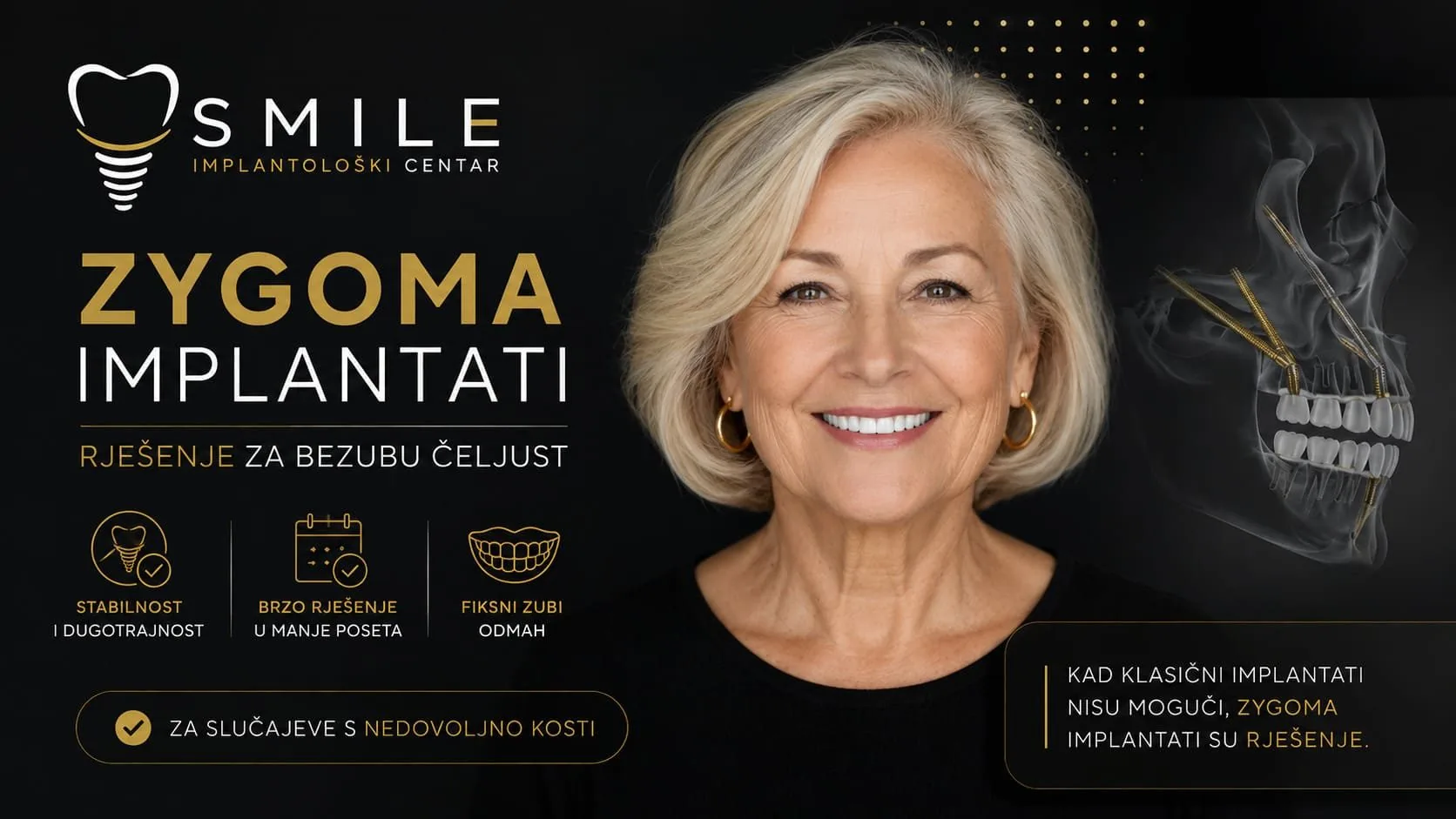
Zygoma implants — an advanced solution for patients who have been told they do not have enough bone for conventional implants. Instead of being anchored in the jawbone, they are fixed in the zygomatic bone, enabling fixed teeth even in complex cases. An individualised treatment plan is developed following 3D CBCT diagnostics.
What are Zygoma implants and how much do they cost?
Zygoma implants are longer implants that anchor into the zygomatic bone rather than the jaw. They are designed for patients with significant bone loss in the upper jaw where standard implantology is not possible. Prices start from €9,100. Fixed temporary prosthetics are placed on the same day when clinical conditions permit.
Zygoma therapy is planned following a consultation and 3D CBCT diagnostics; it is not the first choice when conventional implant rehabilitation is possible.
Price per jaw according to the current price list — same source as /price-list and calculator
| Service | Cijena |
|---|---|
Zygoma therapy — fixed composite teeth (upper jaw) Current price with advance cash payment; anchor price as of 10 September 2026: €13,000. | 9.100 € |
Zygoma therapy — zirconia (upper jaw) Current price with advance cash payment; anchor price as of 10 September 2026: €15,500. | 10.850 € |
The exact package contents (number of Zygoma and conventional implants, temporary restoration, additional procedures) are specified in the written treatment plan following 3D CBCT diagnostics.
Zygoma implants are an advanced implantological solution for patients who do not have sufficient bone in the upper jaw for conventional dental implants. Rather than anchoring implants solely in the jawbone, Zygoma implants utilise the zygomatic bone as a stable support, which can make fixed teeth possible even in highly complex cases of bone loss. At Implantološki centar Smile, patients from across Croatia come for individual assessments, 3D CBCT diagnostics, and treatment planning in cases where conventional implants are not feasible or are not the optimal choice. Zygoma implants are particularly significant for patients who have previously been told they do not have sufficient bone for implants or that they would need to undergo extensive bone augmentation procedures. The cost of Zygoma implants depends on the condition of the upper jaw, the amount of remaining bone, the need for a combination of conventional and Zygoma implants, the type of temporary restoration, the material of the final restoration, and the complexity of the procedure.
Zygoma implants are a specialised solution for patients with severely resorbed (diminished) upper jaw bone, in whom conventional implants are not possible without extensive augmentation procedures. Zygoma implants do not anchor in the alveolar bone — but rather in the considerably stronger zygomatic bone (os zygomaticum), which in almost all patients remains anatomically intact even after years of wearing dentures. Dental implants – frequently asked questions and answers.
The technique was developed in 1989 by Per-Ingvar Brånemark — the father of modern implantology — as an alternative for patients who had for decades been 'condemned' to removable dentures. Today, the zygoma protocol is globally recognised as one of the most advanced and reliable solutions for maxillary rehabilitation (upper jaw).
At Implantološki centar Smile, we perform zygoma implants using premium, certified systems (Noris Medical, JD Implant Systems), with guided surgery and 3D CBCT planning. The success rate exceeds 95% over a 10-year period. Patients typically leave the clinic with fixed temporary teeth on the same day — a true revolution compared to lengthy augmentation protocols that would otherwise take 12–18 months.
Eliminates the need for sinus lift and augmentation – significantly shortening the entire process.
In the majority of cases, a temporary prosthetic restoration is fitted on the very same day — as with the All-on-4 protocol.
The zygomatic bone is exceptionally dense and does not resorb — it provides a permanently stable foundation.
Ideal for patients who have been declined for conventional implants due to insufficient bone volume.
Two main options for patients with insufficient upper jaw bone – and why zygomatic implants are increasingly recommended.
| Zygomatic Implants | Sinus lift + conventional implants | |
|---|---|---|
| Total duration of the process | 1 day (surgery) | 9–18 months |
| Bone augmentation | Not required | Required (sinus lift) |
| Temporary fixed teeth | Same day | After bone healing (6+ months) |
| Number of surgical interventions | 1 | 2-3 |
| Postoperative period | 5–7 days of swelling | Longer recovery after each phase |
| Success rate (10 years) | >95% | 85-92% |
| Total price | Lower (fewer treatment phases) | Higher (multiple procedures) |
| Indication | Severe resorption of the upper jaw | Moderate bone deficiency |
Detailed medical history, clinical examination, CBCT with a particular focus on the zygomatic zone.
Evaluation of options (e.g. 2 zygoma + 2 conventional, or 4 zygoma), outlining risks and benefits.
Extraction of remaining teeth (if necessary), placement of Zygoma implants using guided surgery, and fitting of fixed temporary teeth.
Phone available 24/7 for questions. Antibiotics, analgesics, antiseptic rinses, soft diet.
X-ray check-ups, soft tissue examination, occlusion correction if required.
Impression taking, fabrication of the zirconia or hybrid construction, final placement.
Professional cleaning, X-ray, screw and occlusion check.
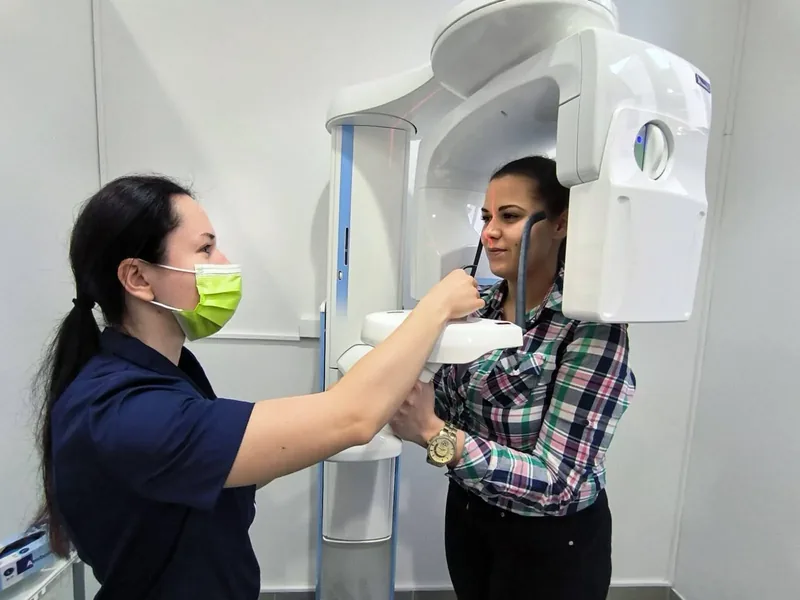
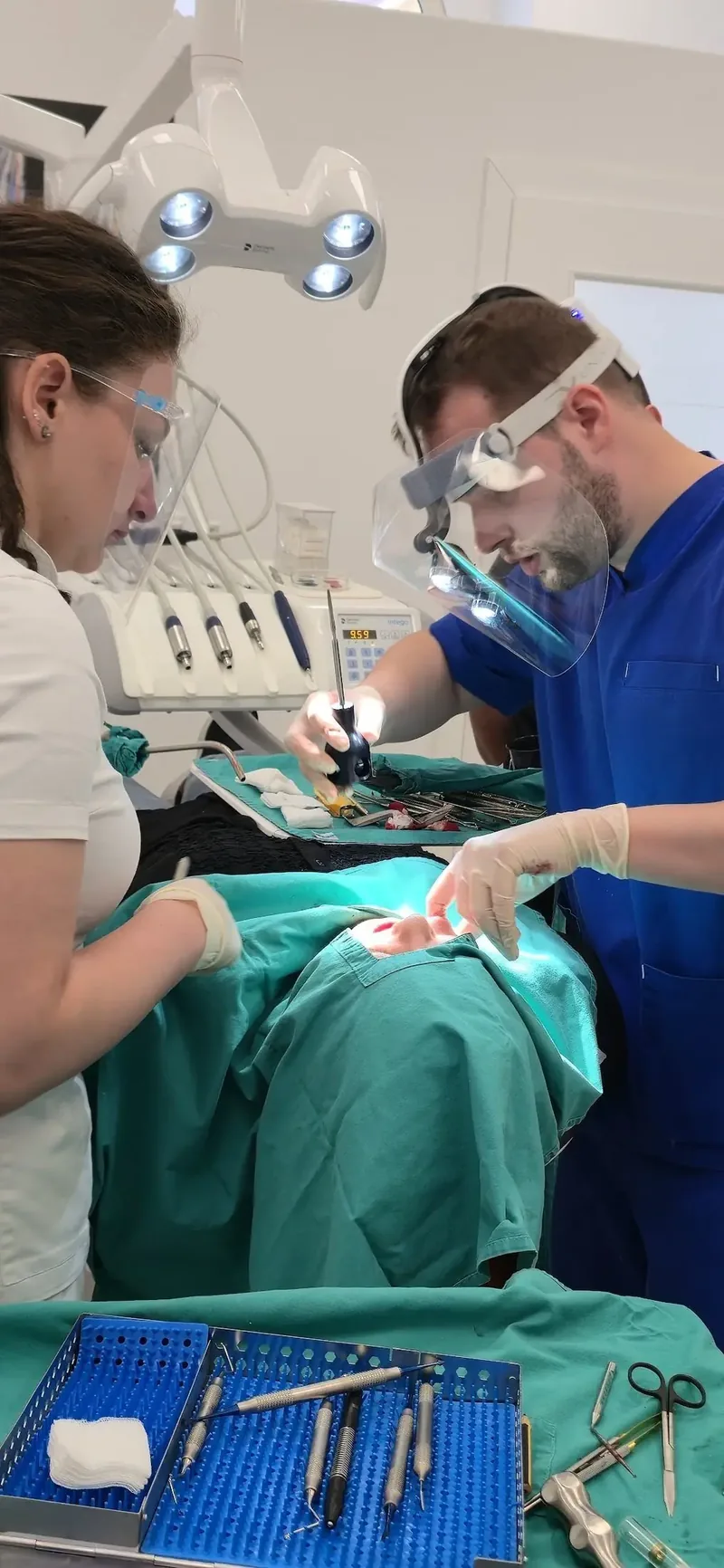
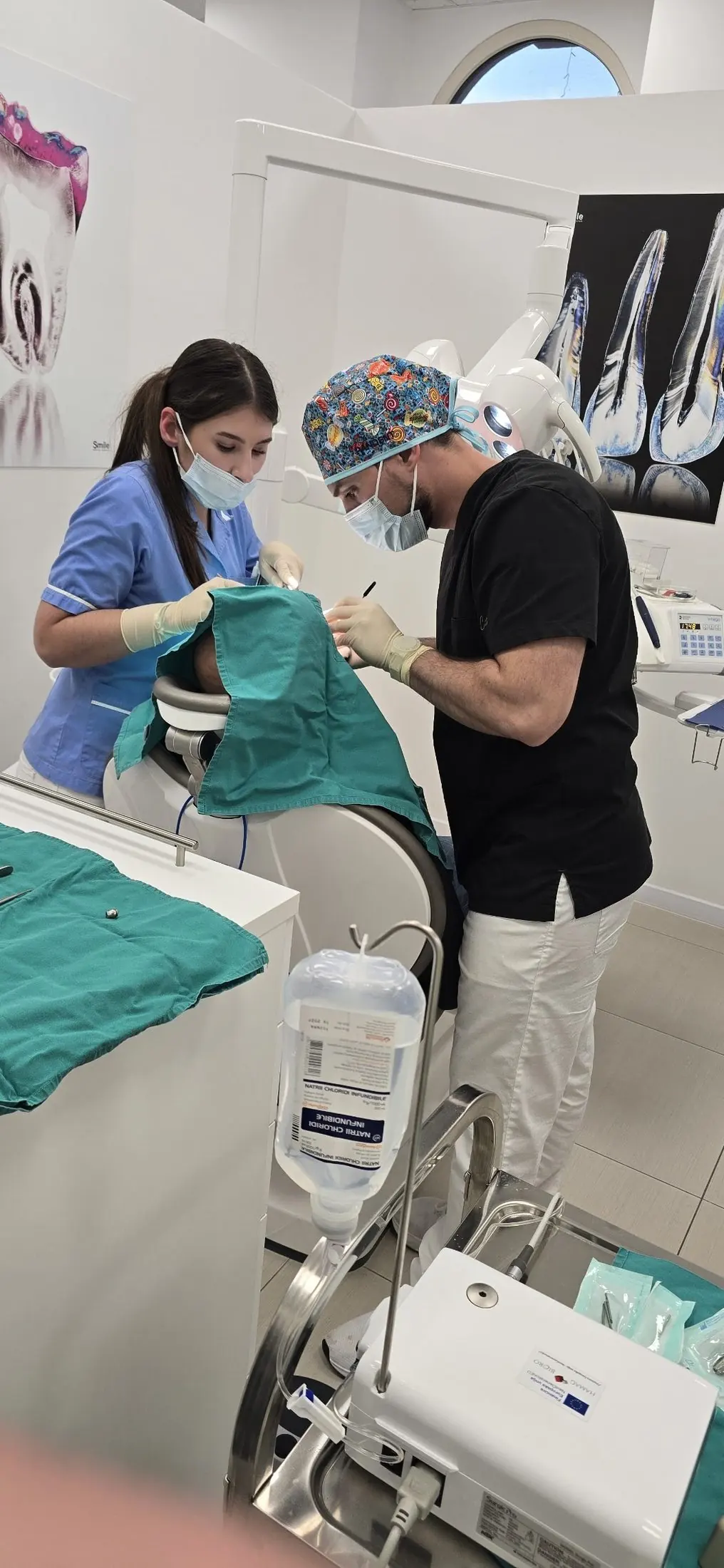
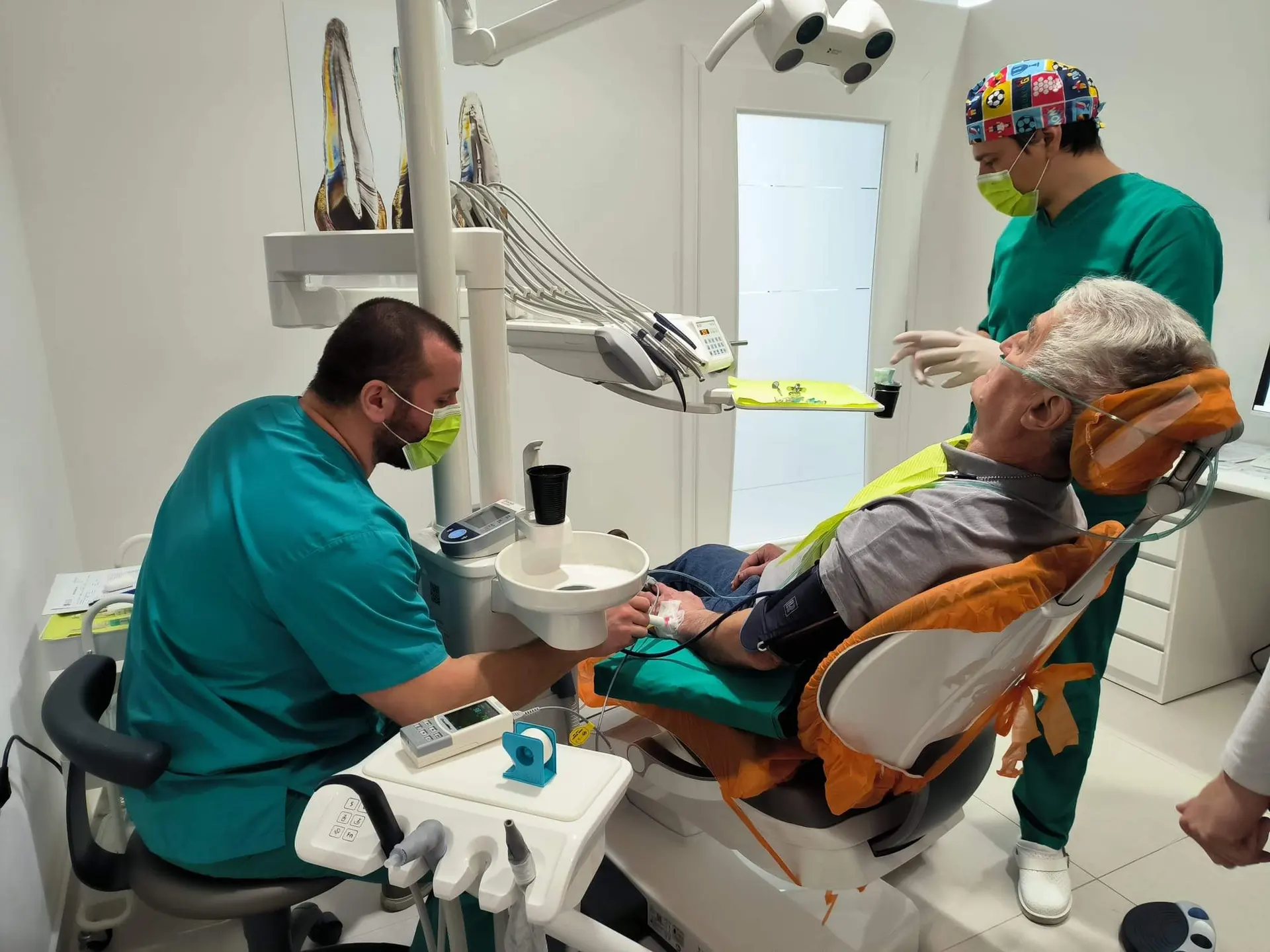
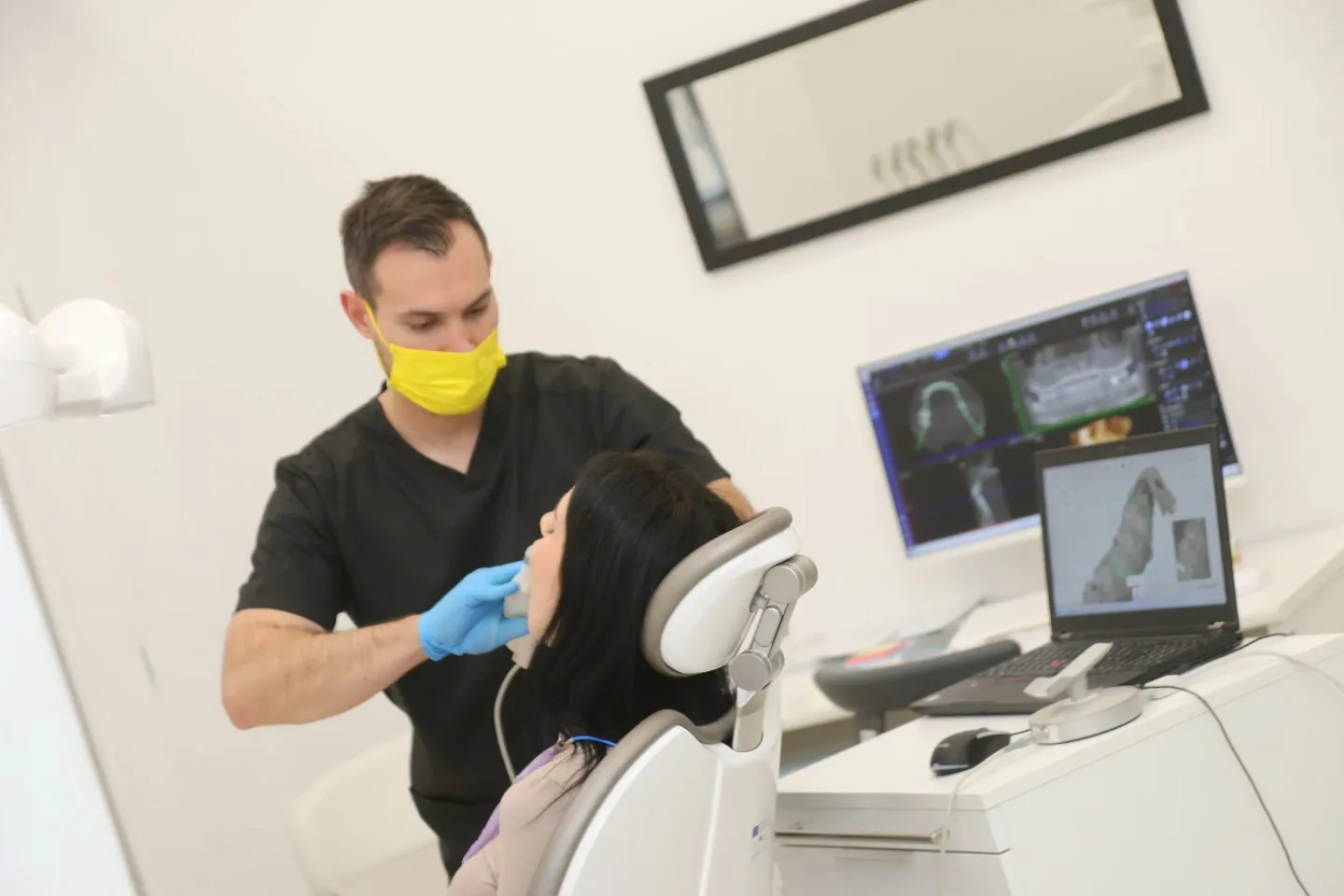
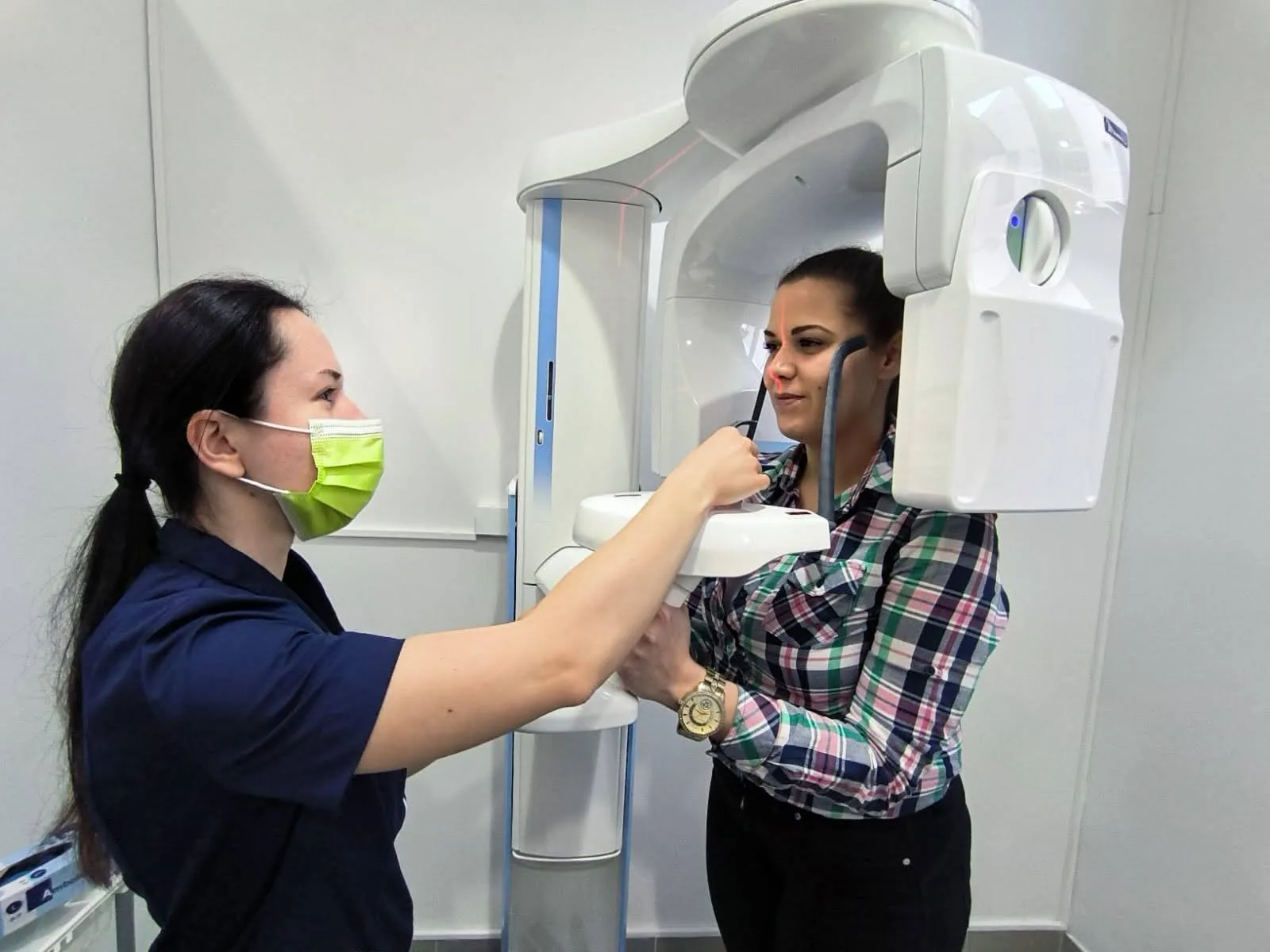
Details of the equipment, materials, and environment in which we perform procedures — a sterile operating suite, premium implants, and digital precision.
 01
 02
 03
 04
Implantološki centar Smile uses Noris Medical Zygomatic implants — a premium system designed for patients with extreme bone loss in the upper jaw. This is the definitive alternative to sinus lift and bone augmentation, eliminating the need for months of waiting and additional surgical procedures. Key advantages of the Noris Medical Zygoma system: • Fixed teeth in one day, even in the most severe cases of bone loss • Alternative to sinus lift — no bone grafting required • 98.2% success rate according to clinical studies • Anchored in the zygomatic bone, which never atrophies • Ideal for patients who have been refused implant treatment by other specialists
A specialised zygomatic implant measuring 30–55 mm in length, certified for the zygomatic (cheekbone) structure. **The solution for patients with extreme upper jaw bone loss**, as an alternative to sinus lift and bone augmentation. **Fixed teeth in a single day** – even in the most complex cases – thanks to the immediate loading protocol. **A 98.2% success rate according to clinical studies** (5+ years of follow-up). At Implantološki centar Smile, we exclusively use the premium Noris Medical Zygomatic system.
Hybrid design for patients with borderline resorption – less invasive.
High-resolution CBCT (up to 75 µm) – essential for Zygoma planning.
3D-printed surgical guides for precise placement of zygomatic implants.
Nine key reasons why patients from across Croatia choose our team — concise, without marketing spin.
Zygoma implants should be performed at a centre with experience in complex implantological cases, 3D CBCT diagnostics, digital planning capabilities, and a team that can integrate both the surgical and prosthetic aspects of treatment. Implantološki centar Smile in Bjelovar specialises in All-on-4, All-on-6 and Zygoma solutions for patients from across Croatia.
“After 4 failed attempts with conventional implants at different clinics — because I 'had no bone' — Smile proposed Zygoma implants. The procedure lasted 4.5 hours, and I had fixed teeth the very same day. My life has changed.”
“I was sceptical because zygomatic implants are more expensive. But when I calculated that a sinus lift + augmentation + conventional implants would take 1.5 years, I chose zygomatic implants. The best decision of my life.”
“70 years old and finally having fixed teeth. The team treated me like a queen; Dr. Grnja patiently explained every step. Surgery under sedation — I felt nothing. I recommend this to older patients.”
Zygoma implants are a specialised type of long dental implant used in patients with significant bone deficiency in the upper jaw. Unlike conventional implants, which are placed into the jawbone, Zygoma implants are anchored into the zygomatic bone, which often retains sufficient stability even in patients with substantial upper jaw bone loss.
This treatment is indicated when conventional implants are not possible due to insufficient bone volume, or when a conventional solution would require extensive bone augmentation procedures. Zygoma implants can provide a fixed implant-supported prosthetic solution even for patients who have worn a removable denture for many years or who have experienced significant bone loss.
Zygoma therapy requires detailed planning, 3D diagnostics, and expertise in complex implantology. For this reason, it is not planned routinely, but only following a precise assessment of anatomy, sinus morphology, zygomatic bone quality, and the feasibility of stable prosthetic rehabilitation.
Zygoma implants may be the optimal solution for patients who do not have sufficient bone in the upper jaw for conventional implants. This frequently occurs following prolonged denture wear, long-term tooth loss, periodontal disease, previously failed treatments, or natural bone resorption following tooth extraction.
This treatment is of particular importance for patients who have been told they are not candidates for implants, or that they must first undergo extensive bone augmentation. In certain cases, Zygoma implants can reduce the need for comprehensive augmentation procedures and provide a faster pathway to fixed teeth.
The most common candidates are patients with complete or near-complete edentulism of the upper jaw, patients with an unstable denture, patients with significant bone loss, and patients seeking a fixed solution when conventional implants are not possible.
The price of Zygoma implants depends on the complexity of the case. As this is a more advanced treatment than conventional implant placement, the price should not be determined without a clinical examination and 3D diagnostics. It is essential to evaluate the remaining bone volume, sinus condition, position of anatomical structures, the need for tooth extractions, and the type of final prosthetic restoration.
Zygoma implants are generally more costly than conventional implants, as they require specialised planning, an experienced implantologist, a more complex surgical procedure, and an individualised prosthetic solution. In some cases, Zygoma implants are used exclusively, while in others they are combined with conventional implants.
The final cost of treatment also depends on whether temporary prosthetic work is planned, a final zirconia restoration, the All-on-4 concept with Zygoma implants, or another type of fixed prosthetic solution. For this reason, following the examination, the patient receives an individualised treatment proposal along with a clear explanation of what the treatment entails.
The process begins with a thorough clinical examination and 3D CBCT diagnostics. The implantologist analyses the upper jaw, the volume of remaining bone, the position of the sinuses, the zygomatic bone, and the feasibility of stable implant placement. Without 3D diagnostics, it is not possible to plan Zygoma therapy with confidence.
Following diagnostics, an individual treatment plan is developed. The plan includes the number of implants, the possibility of combining conventional and Zygoma implants, the type of temporary restoration, the final prosthetic work, and the course of treatment. In more complex cases, it is particularly important to plan the positioning of the implants and the future prosthetic restoration as a single, unified concept.
The surgical procedure is performed according to the treatment plan. Following implant placement, and depending on the stability and condition of the patient, temporary prosthetic work may be planned. The final restoration is fabricated after the healing and stabilisation phase, with adjustments made to the bite, aesthetics, and function.
For patients with insufficient bone volume, various treatment options are available. In some cases, bone augmentation or a sinus lift procedure can be performed, followed by conventional implant placement after healing. In cases of more significant bone loss, this approach can be lengthy, demanding, and may not always be the most appropriate choice.
Zygoma implants can be an alternative when conventional bone augmentation is not the ideal option, or when the patient wishes to avoid a multi-stage process with lengthy waiting periods. Instead of creating additional jawbone, Zygoma implants utilise the zygomatic bone as a stable anchor for the implant-supported solution.
The most suitable solution cannot be determined without a clinical examination. For some patients, bone augmentation is the better choice; for others, Zygoma implants; and for others still, a combination of therapies. Individual diagnostics are therefore essential.
The primary goal of Zygoma therapy is not merely the placement of implants, but the creation of a stable foundation for fixed teeth. Patients with insufficient bone volume often wear a removable denture for years or believe that a fixed solution is simply not available to them. Zygoma implants can open the possibility of fixed prosthetic restoration even in such cases.
Fixed teeth on implants provide greater stability, more confident chewing, clearer speech, and an enhanced sense of security in everyday life. With properly planned treatment, the patient can receive a solution that is significantly more stable than a conventional removable denture.
It is important to emphasise that Zygoma therapy is always planned with a prosthetically driven approach. This means that the implants are not an end in themselves, but are planned in accordance with the future position of the teeth, smile aesthetics, bite, and function.
Complete edentulism of the upper jaw is frequently accompanied by pronounced bone loss. Patients who have been without teeth for an extended period, or who have worn a removable denture for many years, may lose so much bone that conventional implants are no longer straightforwardly feasible.
Zygoma implants can offer a solution for precisely these patients. Rather than abandoning treatment due to insufficient bone volume, it is possible to assess whether conditions exist for anchoring implants into the zygomatic bone. This opens the possibility of fixed teeth even in highly complex cases.
In cases of complete edentulism, it is essential to assess the entire jaw, the bite, the condition of the soft tissues, and the patient's expectations. Treatment is planned not solely for aesthetic reasons, but also with regard to function, stability, and long-term maintenance.
Long-term denture wear frequently leads to bone loss, particularly in the upper jaw. The denture may become increasingly unstable, and the patient may experience difficulties with chewing, speech, soreness, and a persistent sense of insecurity.
For patients who wear a denture and do not have sufficient bone for conventional implants, Zygoma implants may represent an important therapeutic option. The goal is to replace an unstable removable denture with a fixed implant-supported restoration, provided the necessary anatomical and medical conditions are present.
Patients frequently come to us asking whether it is ever possible for them to have fixed teeth again. This is precisely why 3D diagnostics are essential — they reveal whether Zygoma therapy or another implantological solution can be planned.
In certain patients, Zygoma implants can be combined with the All-on-4 concept or with other fixed implantological solutions. This means that some implants can be anchored in the zygomatic bone while others are placed in the remaining jawbone, depending on the patient's anatomy.
This combination can be beneficial for patients who lack sufficient bone in the posterior region of the upper jaw but retain a certain amount of bone in the anterior region. Treatment is always planned individually to ensure that the final prosthetic restoration has a stable and reliable foundation.
It is important to understand that Zygoma is not a 'one-size-fits-all procedure', but rather part of advanced implantological planning. Some patients receive a single Zygoma implant, others two or more, while in some cases Zygoma implants are combined with conventional implants.
The greatest advantage of Zygoma implants is the possibility of a fixed solution for patients with significant bone deficiency. These are often patients who have worn a denture for many years, or who have already been informed that they are not candidates for conventional implants.
Zygoma implants can reduce the need for extensive bone augmentation procedures, shorten the treatment pathway for certain patients, and provide a stable foundation for fixed prosthetic restorations. For the patient, this can mean improved chewing function, greater confidence in speech, and an enhanced quality of life.
A further significant advantage is that the treatment is planned individually and can be combined with other implantological solutions. This allows for a more flexible approach to complex cases.
Zygoma implants are an advanced solution, but they are not suitable for every patient. The therapy requires thorough diagnostics, careful planning, and experience in complex implantology. As with any surgical procedure, there are risks and limitations that must be explained prior to commencing treatment.
Not all patients are candidates for Zygoma implants. It is important to evaluate the patient's general health, sinus condition, upper jaw anatomy, zygomatic bone, oral hygiene, and expectations. In certain patients, a different type of treatment may be the more appropriate choice.
A good treatment plan always includes a clear explanation of the options, limitations, costs, phases of the procedure, and maintenance requirements upon completion of therapy.
The duration of therapy depends on the complexity of the case, the number of implants, the need for tooth extractions, the possibility of temporary restorations, and the type of final prosthetic solution. For some patients, therapy can be planned more quickly, while for others it requires multiple stages.
The process typically involves an examination, CBCT diagnostics, planning, the surgical phase, a temporary restoration where possible, a healing phase, and the fabrication of the final restoration. In Zygoma therapy, it is especially important not to rush the stages that are critical to safety and long-term outcomes.
From the very outset, the patient should receive a general outline of the plan: how many appointments are expected, what is performed at each stage, and when the temporary or final prosthetic restoration can be anticipated.
Zygoma implants and the prosthetic work supported by them require regular hygiene maintenance and check-ups. Although this is a fixed solution, the area around the implants and prosthetic restoration must be kept clean in order to minimise the risk of inflammation and complications.
The patient should use the recommended cleaning aids, attend regular check-ups, and undergo professional cleanings. Particular attention is given to the bite, the stability of the prosthetic work, and the health of the soft tissues around the implants.
The long-term success of Zygoma therapy depends on proper planning, high-quality execution, prosthetic precision, and regular maintenance.
The patient is assessed and Zygoma therapy is managed by an implantology surgeon Dr. Zdravko Grnja, DMDZygoma is planned in a prosthetically guided manner and exclusively following 3D CBCT diagnostics — analysis of the anatomy of the upper jaw, sinuses, and zygomatic bone.
Evaluation process: CBCT → anatomy analysis → assessment of standard implants → augmentation assessment → Zygoma therapy assessment → individualised treatment plan. We do not position Zygoma as the automatically best therapy — in cases of moderate bone loss, augmentation or All-on-4 / All-on-6.
The definitive restoration is crafted in our in-house CAD/CAM laboratory (5-axis milling). For complex reconstructions, please see case studies.
The clinical evidence supporting the claims regarding Zygoma implants presented on this page has been reviewed and approved by Dr. Zdravko Grnja, DMD.
The references cited in this section have been selected and medically verified by Dr. Zdravko Grnja, DMD. Data are drawn from peer-reviewed studies — the final clinical recommendation for each individual patient is always made following a personal examination and 3D CBCT diagnostics.
Zygoma implants are special long implants used in cases of severe bone deficiency in the upper jaw. They are anchored in the cheekbone and can make fixed teeth possible when conventional implants are not an option.
They are most commonly indicated for patients who do not have sufficient bone in the upper jaw, have been wearing a denture for a long time, are completely edentulous, or have previously been told they are not candidates for conventional implants.
The current price of Zygoma therapy for the upper jaw is €9,100 (fixed composite teeth) or €10,850 (zirconia) with advance cash payment; anchor prices as of 10 September 2026: €13,000 / €15,500. The final treatment plan and price depend on the number of Zygoma and any conventional implants, the condition of the upper jaw, and additional procedures — all of which are defined in a written quote following 3D CBCT diagnostics.
Not always. For some patients, bone augmentation is the better choice, while for others Zygoma implants are the safer or more effective solution. The decision is made following an examination and a CBCT scan.
The procedure is carried out under anaesthesia, and for anxious patients, additional comfort-management measures can be planned. After the procedure, swelling, sensitivity, and a recovery period are possible, depending on the complexity of the treatment.
In certain cases, yes. Zygoma implants are precisely the treatment designed for patients with severe bone deficiency in the upper jaw. A definitive assessment is only possible after 3D diagnostics.
Recovery depends on the extent of the procedure, the number of implants, the patient's general health, and the treatment plan. In the first few days, swelling, sensitivity, and the need to follow the implantologist's instructions are to be expected.
Zygoma implants are frequently used as part of a fixed solution for patients who do not have sufficient bone for a conventional All-on-4. In some cases, they can be combined with the All-on-4 concept or conventional implants.
Zygoma implants can be a safe treatment option when correctly indicated, precisely planned, and performed by an experienced implantology team. The key factors are 3D diagnostics, an individualised treatment plan, and proper maintenance.
Not all patients are suitable candidates. Limitations may include certain general health conditions, unfavourable anatomy, active infections, sinus problems, or poor oral hygiene. Each assessment is made on an individual basis.
Longevity depends on the quality of planning, surgical execution, prosthetic work, oral hygiene, follow-up appointments, and the patient's overall health. Regular maintenance is essential for the long-term success of the treatment.
The best approach is an implantological examination and 3D CBCT diagnostics. After analysing the scan, the implantologist can assess whether you are a candidate for Zygoma implants or whether another implant solution would be more appropriate.
Zygoma implants in Bjelovar are placed at Implantološki centar Smile (Trg Stanka Vraza 1) — a fixed solution when there is insufficient bone in the upper jaw, without conventional augmentation. The procedure is planned following 3D CBCT diagnostics, and the centre has extensive experience with complex implantological cases. The first consultation, including a treatment plan, is complimentary with a prior appointment.
Zygoma implants should be performed at a centre with experience in complex cases, 3D CBCT diagnostics and digital planning that integrates both the surgical and prosthetic phases of treatment. Verify the number of cases resolved with insufficient bone volume, the written treatment plan with pricing, and the guarantee on osseointegration.
Do you have a further question? Send an inquiry — we respond within 24 hours.
Implantološki centar Smile in Bjelovar is centrally located and easily accessible to patients from across continental Croatia. Patients regularly travel to us for zygomatic implants from Zagreb (1 hour by motorway), Slavonski Brod, Daruvar, Koprivnica, Križevci, Virovitica and surrounding areas. We organise appointments within a single day so that patients travelling from further afield can minimise the number of visits – where medically justified, we use immediate-load protocols (fixed provisional teeth on the same day).
Zygoma Implants: A Lifeline for Patients with Insufficient Bone
Follow-up 3D CBCT after Zygoma implant placement
Find out which solution is right for you — All-on-4, All-on-6 or Zygoma. Free assessment with no obligation.
Quick estimate for crowns, implants and All-on-X — current and anchor prices according to the price list.
Transparent pricing for implants, crowns, and All-on-X packages.
Curated recommendations — services, guides and tools that best complement this topic.
All-on-4
All-on-6
Dental implants
**What is the price of zirconia crowns in Croatia in 2026?** The price of a zirconia crown at Implantološki centar Smile starts from **€250 (current…
3D Diagnostics
Send a brief description of your condition — you are also welcome to include a question for our specialists. We respond the same day and suggest an appointment time that suits you.
