

01
No grinding of adjacent teeth
Unlike bridges, an implant does not require grinding down healthy adjacent teeth — we preserve your natural tooth structure.
A complete tooth on an implant (implant + abutment + zirconia crown on implant) has a single current price for all three components, valid with advance cash payment; the exact amount and the anchored price as of 10 September 2026 are listed in the price table below. Implant placement is performed under local anaesthesia (30–45 min per implant), and after 3–6 months of osseointegration the definitive crown is fitted. Osseointegration guarantee on premium implants (MegaGen · C-Tech · Noris) according to written terms and conditions, with full support from Dr. Grnja at every step.
How much do dental implants cost and who are they intended for?
Dental implants are titanium screws inserted into the jawbone, taking on the role of a tooth root. They are intended for patients who have lost one, several, or all of their teeth and are seeking a permanent solution. Prices start from €1,080. Fixed temporary teeth are possible on the same day as surgery when clinical conditions permit (All-on-4/6).
The final indication and implant system selection (MegaGen · C-Tech · Noris) are determined following a clinical examination and 3D CBCT diagnostics.
Cost framework by treatment type according to the current price list. Current prices apply with advance cash payment. The final price is determined after the 3D CBCT examination.
| Service | Cijena |
|---|---|
Complete tooth on implant Implant 550 € + abutment 210 € + zirconia crown on implant 320 € from our in-house CAD/CAM laboratory. Current prices with advance cash payment; anchor price on 10. 9. 2026: 1,475 €. | 1.080 € |
Zirconia ceramic crown on implant (CAD/CAM) For patients who already have an implant and abutment in place. Anchor price €400. | 320 € |
Zirconia crown on natural tooth (CAD/CAM) Crown on a natural prepared tooth — not an implant crown. Anchor price €350. | 250 € |
Initial consultation + 3D CBCT + treatment plan The first specialist examination and 3D CBCT diagnostics are complimentary with a prior appointment. A standalone CBCT scan of a single jaw without an examination is charged according to the price list (€65). | Free with registration |
Bone augmentation with membrane (1 g) When bone width/height is insufficient. Final extent determined by 3D CBCT findings. | 400 € |
Sinus lift — internal (closed) For implants in the area of the upper molars in cases of minor bone deficiency. | 530 € |
Sinus lift — external (open) For more significant bone deficiency in the upper jaw. A different technique from the internal sinus lift. | 930 € |
Zygoma implant (zygomatic) Zygoma therapy of the upper jaw: 9,100 € (fixed composite teeth) / 10,850 € (zirconia) with advance cash payment; anchored prices as of 10. 9. 2026: 13,000 € / 15,500 €. Individual assessment is mandatory. | from €9,100 |
The price of an implant with a crown includes: clinical consultation, selection of a premium system (MegaGen · C-Tech · Noris Medical), placement under local anaesthesia, all check-ups throughout osseointegration, a zirconia crown from our in-house CAD/CAM laboratory, and an osseointegration guarantee in accordance with written warranty terms.
A complete tooth on an implant at Smile costs €1,080 (implant €550 + abutment €210 + zirconia crown on implant €320) with advance cash payment; the anchored price as of 10 September 2026 is €1,475. The final amount depends on the choice of implant system (MegaGen, C-Tech, Noris), bone condition, and the need for additional procedures such as bone augmentation or sinus lift. Dental implant placement is a minimally invasive procedure performed under local anaesthesia, lasting 30–45 minutes per implant. Pain during the procedure is eliminated, and post-operative recovery is typically milder than that of a conventional tooth extraction. Following placement, a 3–6 month osseointegration period (firm bonding of the implant with the bone) ensues, after which a definitive zirconia crown is fabricated in our in-house laboratory. For all premium implants we place (MegaGen KOR, C-Tech IT, Noris DE), we provide an osseointegration guarantee in accordance with written warranty terms — clear, written, and with no fine print. At Implantološki centar Smile, patients from across Croatia come for an individual assessment, 3D CBCT diagnostics, and a treatment plan that may include a single implant, implant-supported bridge, All-on-4, All-on-6, or Zygoma implants in cases of insufficient bone. Treatment is led by Dr. Zdravko Grnja, DMD — with over 10 years of implantology experience and 1,500+ personally placed implants. If you would like a concrete assessment of your specific case, arrange a complimentary initial consultation upon registration — following which you will receive a written treatment plan with clear steps, timelines, and costs.
Dental implants are the gold standard for replacing missing teeth — a solution that looks, functions, and lasts just like a natural tooth. In modern dentistry, an implant is a titanium screw inserted into the alveolar bone of the jaw, where it becomes permanently integrated into the body through the process of osseointegration (the bonding of bone and implant). An abutment is then placed on the implant — a crown, a bridge, or even a complete new jaw.
At Implantološki centar Smile, we place hundreds of implants each year, ranging from single implants (when one tooth is missing) to complex full-arch rehabilitations All-on-4 and All-on-6All implants we use are in the premium category — C-Tech (Italy), Megagen (South Korea), Noris Medical (Israel) — with a manufacturer's warranty according to written terms.
Unlike bridges on natural teeth, an implant requires no grinding of adjacent teeth. Unlike a denture, an implant preserves the jawbone and does not shift during chewing. Investing in an implant is an investment in long-term health and quality of life.
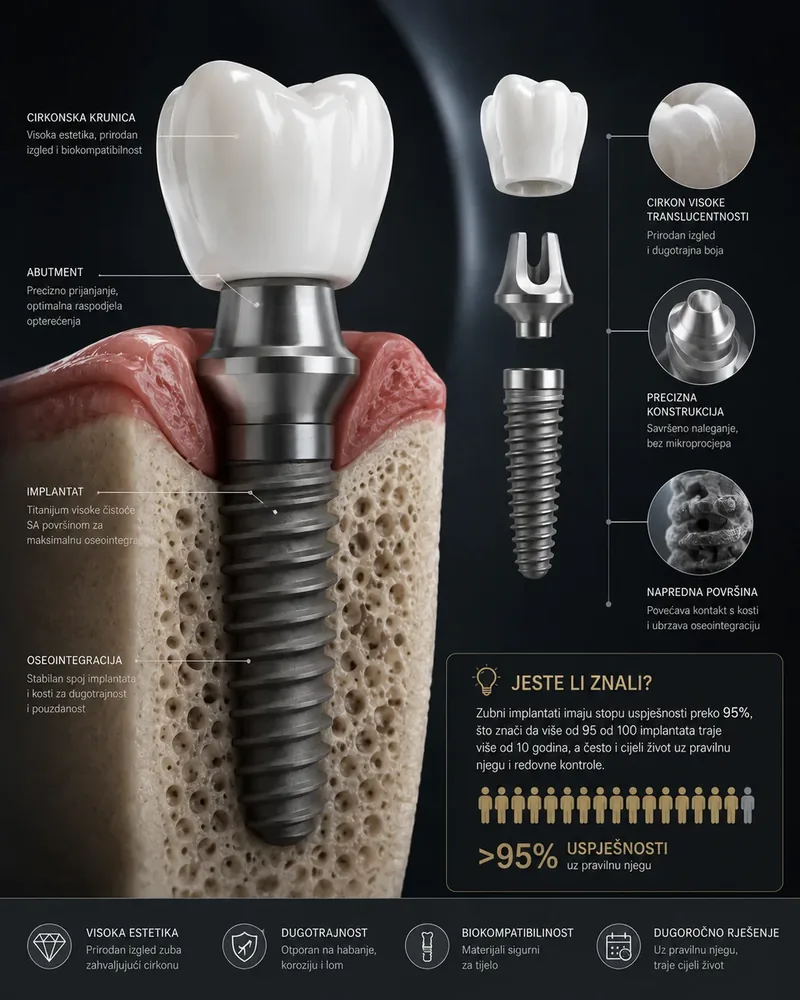
Unlike bridges, an implant does not require grinding down healthy adjacent teeth — we preserve your natural tooth structure.
The implant assumes the function of the root and stimulates the bone — preventing the resorption that occurs following tooth extraction.
A zirconia crown on an implant is visually indistinguishable from a natural tooth — perfectly matched in colour, shape, and translucency.
With regular check-ups, implants last for decades — the most durable solution in modern dentistry.
A detailed overview of three solutions for replacing missing teeth.
| Implant | Bridge / Denture | |
|---|---|---|
| Durability | 25+ years (often lifetime) | Bridge: 10–15 years; Denture: 5–8 years |
| Grinding of adjacent teeth | Not required | Bridge: required; Denture: no |
| Bone preservation | Yes (prevents bone resorption) | No — the bone resorbs |
| Chewing function | 100% (like a natural tooth) | Bridge 80%, Denture 30–50% |
| Aesthetics | Indistinguishable from natural teeth | Bridge: excellent; Denture: visible |
| Hygiene | Identical to natural teeth | Bridge: more demanding interproximal cleaning |
| Starting price | Higher | Lower |
| Cost over 20 years | Lower (infrequent adjustments) | Higher (replacement every 5–15 years) |
Detailed clinical examination, OPG/CBCT imaging, intraoral scan. Consultation on implant options vs. alternatives. Written treatment plan and exact pricing.
The procedure under local anaesthesia takes 30–60 minutes per implant. We use guided surgery for precision. With a single-stage protocol, a temporary crown is placed on the same day. The patient goes home the same day.
Assessment of gum healing, suture removal (if needed), professional hygiene, patient education.
The implant fuses with the bone. During this period, the patient wears a temporary crown (single-phase protocol) or a discreet temporary prosthesis (two-phase protocol).
Intraoral scan, CAD/CAM design, milling in our laboratory. Trial fitting followed by final cementation/bonding to the implant.
Professional hygiene using specialised implant instruments, annual X-ray, adjustments as needed. Implant warranty in accordance with written terms.
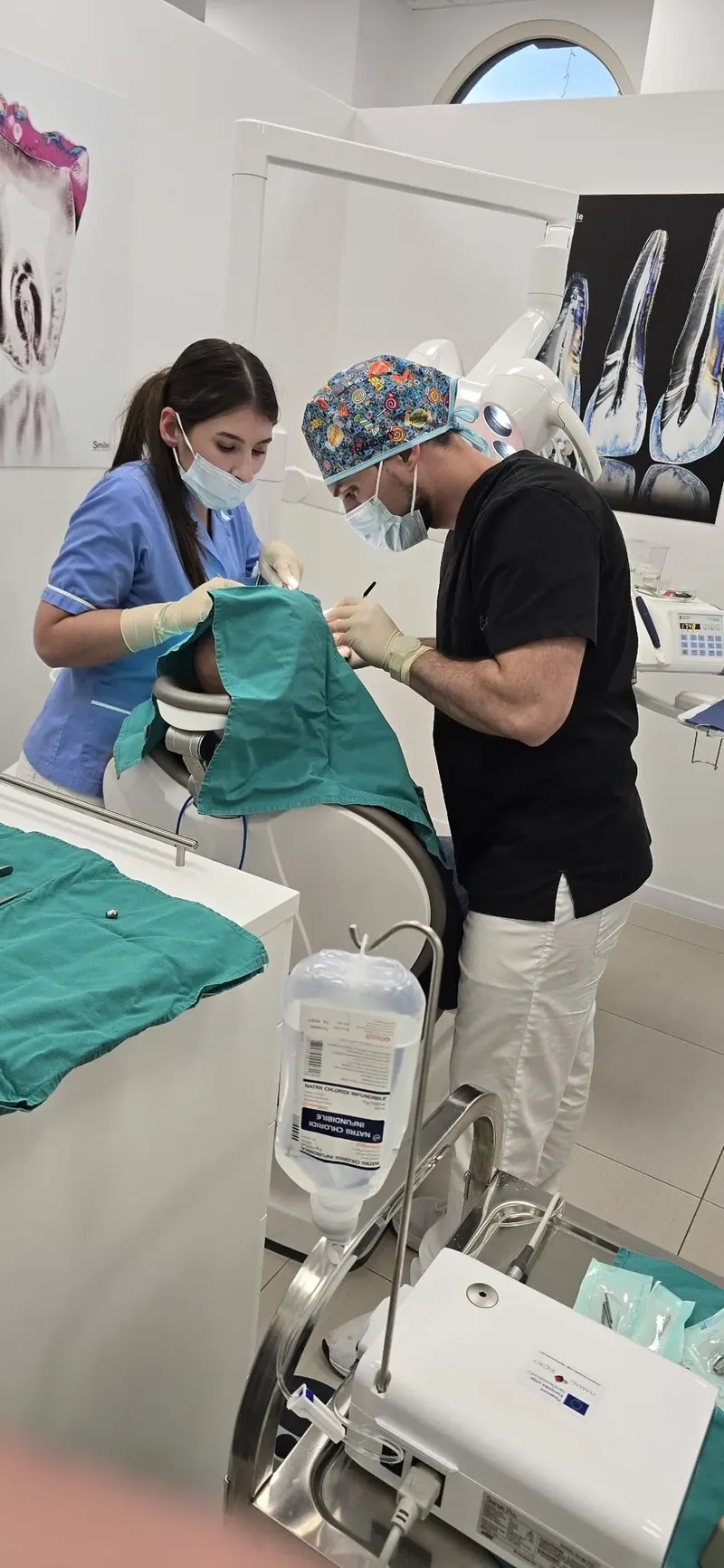
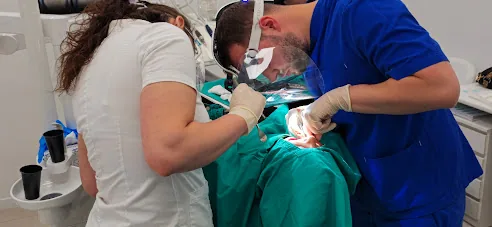
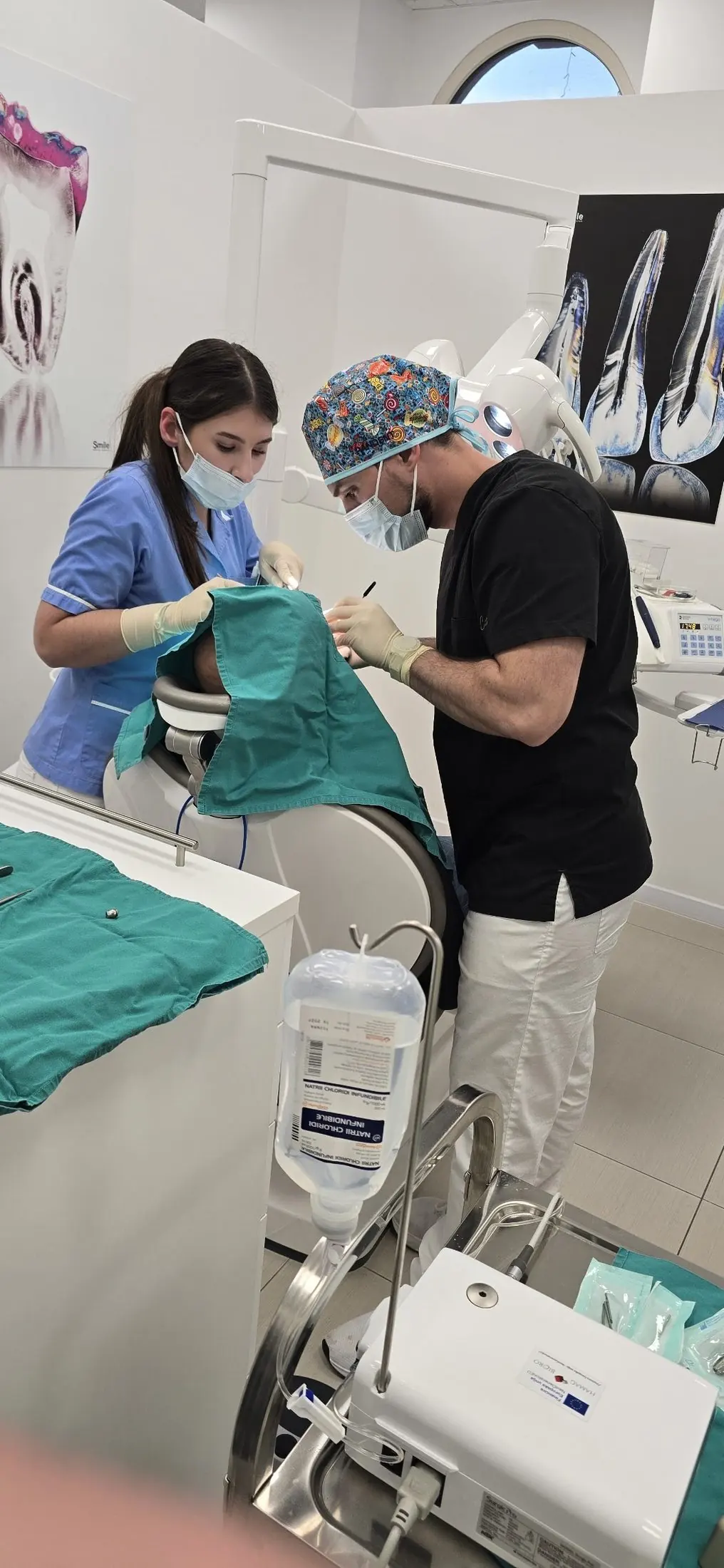
Details of the equipment, materials, and environment in which we perform procedures — a sterile operating suite, premium implants, and digital precision.
 01
 02
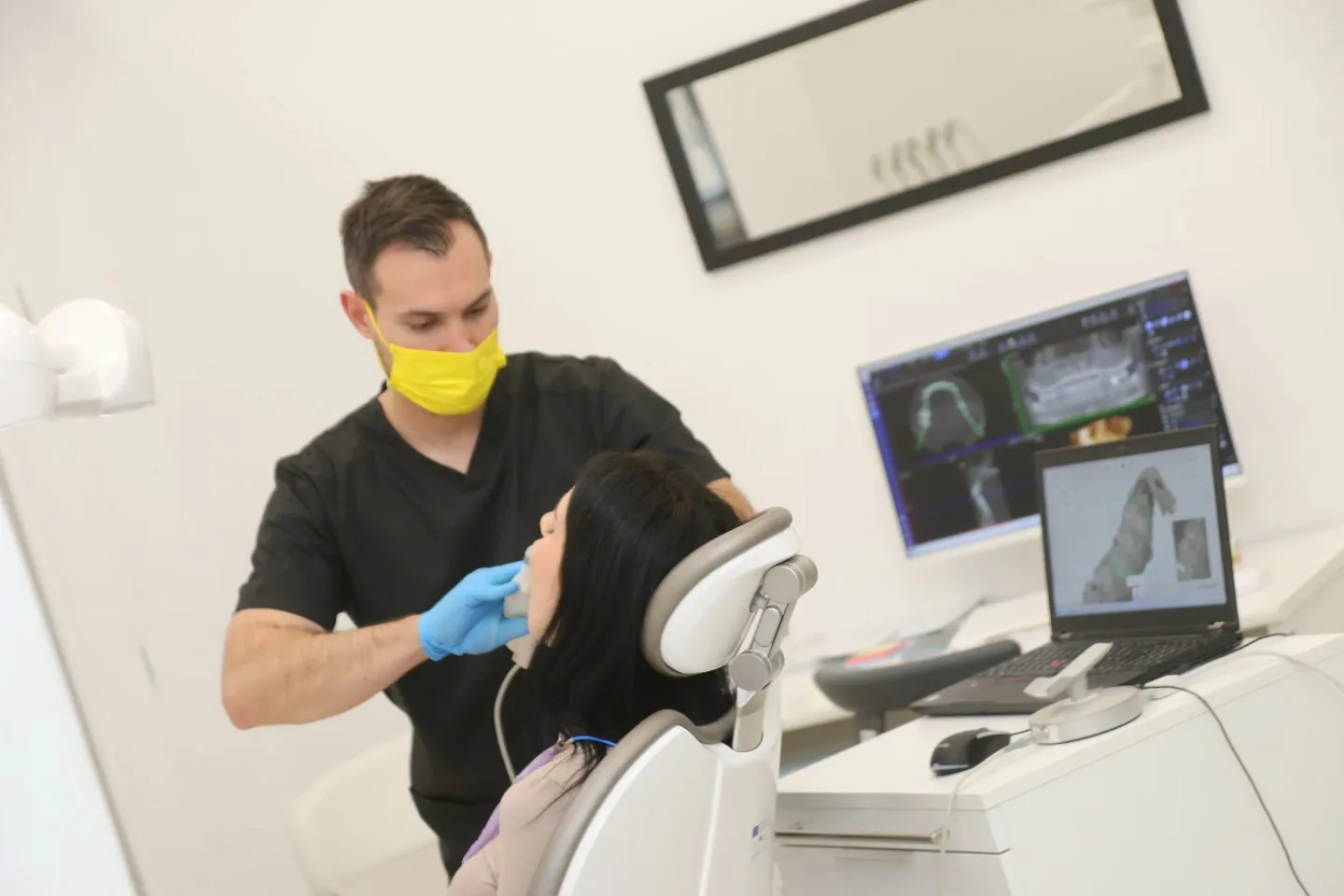 03
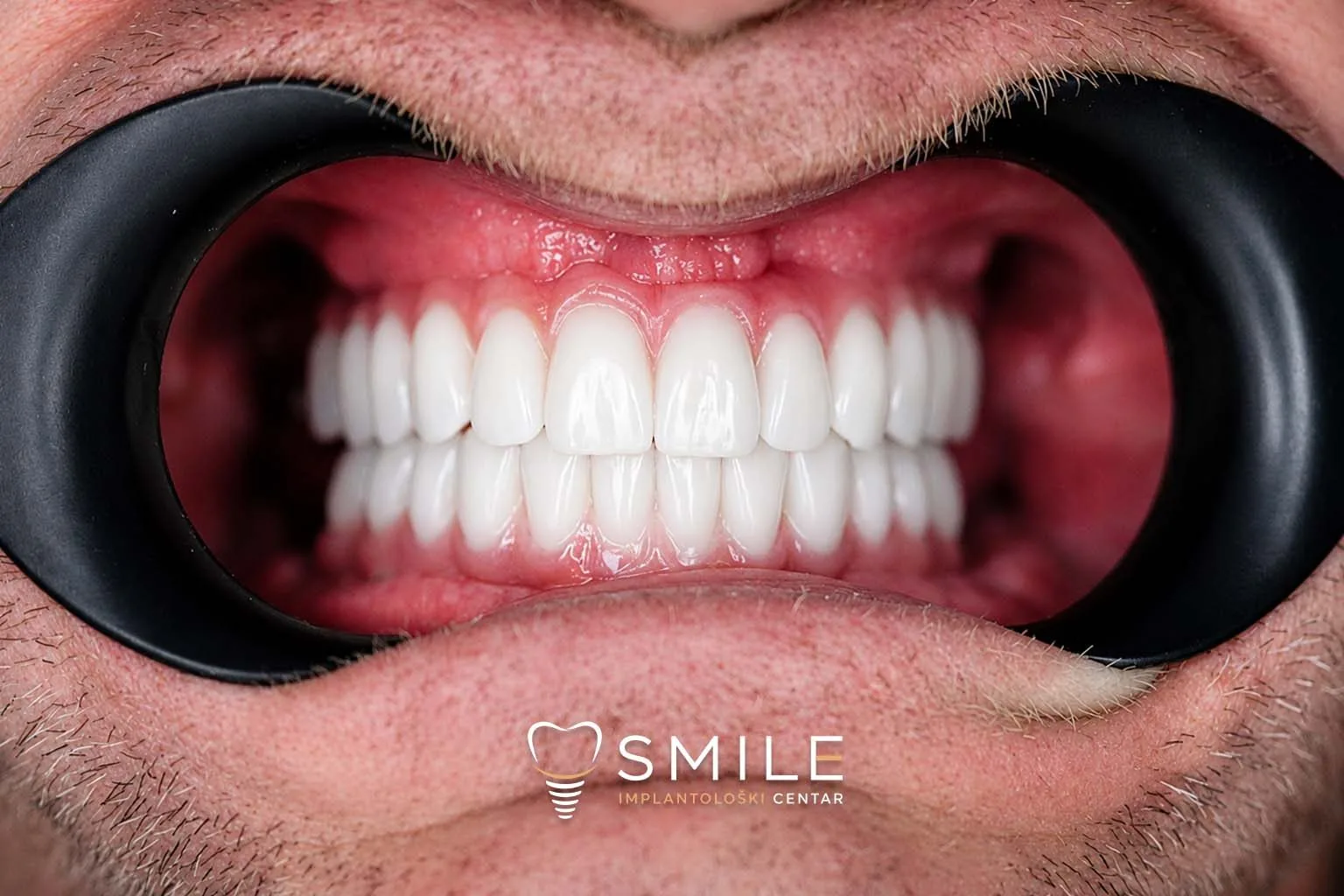 04
Conical connection — minimal micro-fracture, prevents resorption around the implant neck.
Knife-edge thread — primary stability even in D4 bone (the softest bone type).
The most translucent zirconia on the market — indistinguishable from a natural tooth.
Low radiation dose, high resolution — used when a more precise bone analysis is needed.
Nine key reasons why patients from across Croatia choose our team — concise, without marketing spin.
“I lost my lower front tooth in an accident. The implant placement took 45 minutes and I felt nothing. Three months later I have a zirconia crown — nobody notices it isn't my own tooth.”
“I was looking for the best value for money for 4 implants. At Smile I received premium materials (C-Tech) for 30% less than in Zagreb. One year later — everything is perfect.”
“I had a bridge for 10 years — when it broke, I decided on implants instead of a new bridge. Dr. Grnja recommended 2 implants + a bridge on top. The smartest decision I ever made — now I can even bite into bread without a worry.”
A dental implant is a titanium screw that is placed into the jawbone and serves as a replacement for the root of a missing tooth. Following the healing phase, an abutment and prosthetic restoration are attached to the implant — most commonly a crown, bridge, or larger fixed implant-supported construction.
Unlike conventional solutions, an implant does not merely replace the visible part of the tooth — it creates a stable foundation for a new prosthetic restoration. For this reason, dental implants are used in cases of single tooth loss, multiple tooth loss, or complete edentulism.
Implants provide greater stability, a more natural chewing sensation, and a more natural appearance compared to removable dentures. With properly planned treatment, they can significantly improve quality of life, confidence in speech, and overall self-assurance.
Dental implants may be the best solution when a patient is missing one tooth, several teeth, or all teeth in one or both jaws. They are also used for patients who do not wish to have healthy adjacent teeth prepared for a conventional bridge, as well as for patients whose removable denture is unstable or causes discomfort.
Implant therapy is particularly beneficial for patients seeking a long-term, stable, and aesthetically superior solution. For a single missing tooth, an implant often allows replacement without preparing the adjacent teeth. For multiple missing teeth, an implant-supported bridge can be planned. For complete edentulism, All-on-4 or All-on-6 therapies are frequently considered.
For patients with significant bone deficiency, additional procedures such as bone augmentation, sinus lift, or Zygomatic implants may be considered, depending on the condition of the jaw and the diagnostic findings.
The price of dental implants does not always consist of a single implant alone. For a single missing tooth, treatment most commonly includes an implant, an abutment, and a crown. For multiple missing teeth, treatment may include an implant-supported bridge, while for complete edentulism, All-on-4 or All-on-6 solutions are frequently considered.
The final cost is influenced by the number of implants, bone condition, the need for tooth extractions, the type of prosthetic work, the material of the crown or bridge, CBCT diagnostics, and any additional procedures required. For this reason, the exact cost is determined following an examination and an individualised treatment plan.
It is important to explain to patients considering implants not only how much an implant costs, but also everything required to achieve a result that is functional, aesthetically pleasing, and long-term stable. The lowest price does not always mean the best solution, as the quality of implant therapy depends on diagnostics, planning, surgical execution, prosthetic fabrication, and regular follow-up appointments.
Dental implant placement begins with an examination and diagnostics. The first step is an analysis of the condition of the teeth, gums, bone, and bite. A CBCT 3D scan enables the implantologist to precisely assess bone volume, the position of nerves and sinuses, and the space available for safe implant placement.
Following diagnostics, an individualised treatment plan is developed. The plan includes the number of implants, the type of prosthetic work, any possible additional procedures, and the expected course of treatment. In simpler cases, this involves replacing a single tooth, while in more complex cases the plan may include multiple implants, an implant-supported bridge, or complete jaw reconstruction.
The implant placement itself is performed under local anaesthesia. Following placement, a healing phase begins during which the implant integrates with the bone. Once stable conditions are achieved, the final prosthetic restoration is fabricated. For certain treatments, a temporary restoration may also be planned, depending on bone condition, implant stability, and the individualised treatment plan.
Insufficient bone volume is one of the most common reasons patients believe they are not candidates for dental implants. However, a lack of bone does not always mean that implant therapy is not possible. A CBCT scan must be performed to assess how much bone is present, where bone loss has occurred, and which treatment options are available.
For moderate bone deficiency, bone augmentation or a sinus lift may be considered. In more severe cases, particularly in the upper jaw, Zygomatic implants may represent a viable solution. Zygomatic implants are used for patients who do not have sufficient bone for conventional implants but wish to have a fixed restoration.
It is therefore important not to draw conclusions without a clinical examination. Patients who have previously been told they do not have sufficient bone can often benefit from a second opinion and an individualised assessment of their treatment options.
For a single missing tooth, a single implant with a crown is most commonly planned. For multiple missing teeth, several implants and an implant-supported bridge can be planned. However, for patients missing the majority of their teeth, or whose remaining teeth are in poor condition, placing individual implants for each tooth is often not the optimal solution.
In such cases, therapies such as All-on-4 or All-on-6 are considered. All-on-4 uses four implants as supports for a fixed prosthetic restoration in one jaw, while All-on-6 uses six implants and can provide additional stability for certain patients.
The choice between a single implant, an implant-supported bridge, All-on-4, or All-on-6 therapy depends on the number of missing teeth, bone condition, bite, patient expectations, and the treatment plan developed following a clinical examination.
Dental implants can last for many years, but their longevity depends on several factors. Proper diagnostics, high-quality surgical placement, precise prosthetic work, good oral hygiene, regular check-ups, and the patient's overall health are all of paramount importance.
Smoking, poor hygiene, uncontrolled periodontitis, bruxism, and the absence of regular check-ups can all increase the risk of complications. This is why implant therapy does not end with the delivery of the final restoration. Long-term success also depends on maintenance, professional check-ups, and proper home hygiene.
Patients are advised to attend regular check-ups so that the condition of the implants, gums, bite, and prosthetic work can be monitored. Timely check-ups can prevent more serious complications and extend the longevity of the treatment.
Dental implants offer numerous advantages over conventional solutions. They can replace a missing tooth without grinding down adjacent teeth, provide a stable foundation for a crown or bridge, and offer a fixed solution for patients who do not wish to have a removable denture.
In more extensive reconstructions, implants can significantly improve chewing function, confidence in speech, and overall quality of life. Patients often feel more secure knowing that the prosthetic work does not shift as a removable denture would. Beyond function, implants also enable a more naturally aesthetic smile when therapy is properly planned.
The greatest advantage is the possibility of an individualized approach. Treatment can be tailored to each patient: from a single implant to a complete fixed full-arch solution.
A candidate for dental implants may be anyone missing one tooth, several teeth, or all teeth, provided that their general health and oral condition permit implant therapy. It is important to assess bone volume, gum condition, hygiene, bite, and any potential risk factors.
Patients with periodontitis, diabetes, smokers, or patients with significant bone deficiency may also be candidates, but they require a more thorough evaluation and a more carefully considered treatment plan. Some cases require preparatory procedures before implant placement, such as treatment of inflammation, tooth extraction, bone augmentation, or stabilization of the periodontal condition.
This is why a specialist examination is the most important first step. Only after a clinical examination and CBCT diagnostics can it be clearly determined which therapy is most appropriate and how long it will take.
3D CBCT diagnostics is an essential component of modern implant planning. Unlike conventional 2D imaging, CBCT provides a three-dimensional view of the jaw, bone, sinuses, and anatomical structures. This allows the implantologist to plan implant positioning with greater precision and minimize the risk of complications.
In implant therapy, it is not sufficient merely to identify where a tooth is missing. It is essential to know how much bone is present, what the bone quality is like, and where the key anatomical structures are located. A CBCT scan supports safer decision-making and the creation of an individualized treatment plan.
In more complex cases, such as complete edentulism or bone deficiency, 3D diagnostics are particularly important as they enable precise planning of All-on-4, All-on-6, or Zygoma therapy.
Patients with periodontitis frequently lose teeth due to inflammation of the supporting tissues and bone loss. In such cases, implant therapy may be possible, but it must not be planned without a prior assessment and stabilization of the condition.
Before implant placement, it is essential to arrest active inflammation, assess bone condition, and determine which teeth can be preserved and which need to be extracted. If implants are placed in an uncontrolled inflammatory environment, the risk of complications may be significantly higher.
In patients with advanced periodontitis, more comprehensive solutions are frequently considered, such as implant-supported bridges, All-on-4 or All-on-6 therapy. The goal is not only to replace lost teeth, but to create a stable and long-term sustainable solution.
A dental implant and a dental bridge can both address the problem of a missing tooth, but they do so in different ways. A conventional bridge typically requires the preparation of adjacent teeth to serve as abutments for the bridge. An implant replaces the root of the missing tooth and allows a crown to be fabricated without the need to prepare healthy adjacent teeth.
For patients with healthy adjacent teeth, a dental implant is often the preferable option, as it preserves the surrounding teeth. For patients who already have compromised adjacent teeth, a bridge may be one of the possible solutions. The decision depends on the condition of the teeth, bone, bite, and the patient's expectations.
The best solution is chosen not solely on the basis of price, but on the basis of long-term stability, function, and preservation of the remaining teeth.
A complete tooth on an implant at Implantološki centar Smile costs €1,080 (implant €550 + abutment €210 + zirconia crown on implant €320) with advance cash payment; the anchor price on 10 September 2026 will be €1,475. The final price depends on bone condition and the need for additional procedures (augmentation, sinus lift) and is confirmed in a written treatment plan following examination and 3D CBCT diagnostics.
Implant placement is performed under local anaesthesia; for anxious patients, additional comfort-management measures can be planned. Most patients describe the procedure as less uncomfortable than they expected.
The placement of a single implant is often relatively quick, but the entire process includes examination, diagnostics, planning, healing, and the fabrication of the prosthetic restoration.
Dental implants can last for many years, but their longevity depends on oral hygiene, regular check-ups, general health, smoking, bite conditions, and the quality of prosthetic work.
If there is insufficient bone, possible options include bone augmentation, sinus lift, or – in more severe cases of bone deficiency – Zygoma implants.
For certain patients, it is possible to plan a temporary tooth or temporary prosthetic restoration, but this depends on the stability of the implant, the bone condition, and the type of therapy.
The implant replaces the tooth root, the abutment connects the implant to the prosthetic restoration, and the crown is the visible part that looks and functions like a natural tooth.
An implant often allows tooth replacement without grinding down adjacent teeth, whereas a bridge requires support from neighbouring teeth. The best solution depends on the condition of the teeth, bone, and bite.
In patients with periodontitis, the inflammation must first be stabilised and the bone condition assessed. Implant therapy can then be planned if the conditions for a safe procedure are met.
In most cases, dental implants are not covered as a standard benefit by HZZO. It is therefore important to carry out an individual assessment and explore which realistic treatment options are available.
Recovery after implant placement depends on the number of implants, the complexity of the procedure, and the patient's overall health. Mild swelling, sensitivity, and discomfort may be normal in the first few days following the procedure.
In rare cases, an implant may fail to integrate with the bone. The situation is then assessed individually, the implant is removed if necessary, and a new treatment plan may be considered after healing.
Dental implants in Bjelovar are placed by Implantološki centar Smile at Trg Stanka Vraza 1. The clinic operates with 3D CBCT diagnostics, guided digital surgery, and premium systems (MegaGen · C-Tech · Noris), while definitive restorations are crafted in its own CAD/CAM laboratory. The first implantology consultation, including a 3D scan and treatment plan, is complimentary with a prior appointment.
Verify the team's experience and the number of implants placed, whether the clinic uses 3D CBCT diagnostics and guided surgery, which implant systems they use, and whether they have an in-house laboratory and a written treatment plan with pricing. Ask for a guarantee on osseointegration and the option of a second opinion based on existing scans. For exactly what to ask about the implant brand and model, read our guide Which dental implants are the best?.
Do you have a further question? Send an inquiry — we respond within 24 hours.
Are you considering dental implant treatment in Zagreb and exploring other options? Implantološki centar Smile is located in Bjelovar. During your consultation, we assess your condition and prepare an individualised treatment plan, with a clear breakdown of implant placement, prosthetic work, and any additional procedures.
Before your visit, you are welcome to describe what you would like to address and let us know whether you have any existing scans. Our team will explain the next steps and schedule your consultation. The schedule of visits and check-ups is determined according to your treatment plan; please check travel time based on your starting point and current traffic conditions.
How to prepare for your visit from Zagreb. Bring any existing X-ray or CBCT scans you may have and a list of medications you are taking; if you have a quote from another clinic, we can compare it during your consultation. The initial specialist examination and 3D CBCT diagnostics are free of charge with prior appointment. Follow-up visits and prosthetic treatment phases are planned in advance and, where clinically possible, combined into a single appointment.
Schedule a consultation, view our location and our price listDocumented rehabilitations of our patients are available in the case studiesIf you are missing all teeth in a jaw, the fixed-teeth solution on four implants is described on the All-on-4 page.
The implant placement process
Find out which solution is right for you — All-on-4, All-on-6 or Zygoma. Free assessment with no obligation.
Quick estimate for crowns, implants and All-on-X — current and anchor prices according to the price list.
Transparent pricing for implants, crowns, and All-on-X packages.
Curated recommendations — services, guides and tools that best complement this topic.
All-on-6
All-on-4
Zygomatic implants
**What is the price of zirconia crowns in Croatia in 2026?** The price of a zirconia crown at Implantološki centar Smile starts from **€250 (current…
Aesthetic Dentistry
Oral Surgery
Send a brief description of your condition — you are also welcome to include a question for our specialists. We respond the same day and suggest an appointment time that suits you.
